
Arizona's desert landscapes and rugged forests are home to one of North America's most formidable nocturnal predators—the Great Horned Owl. Known for their piercing yellow eyes, tufted "horns," and haunting calls that echo through the night, these owls are masters of survival in the diverse environments of the Grand Canyon State. From the saguaro-studded Sonoran Desert to the pine-covered mountain ranges, Great Horned Owls thrive in Arizona’s varied ecosystems, preying on everything from rodents to rattlesnakes.
 This is a morning shot of the Great Horned Owl that has taken residence in a mesquite tree in our yard. Luckily, the branch that she uses is right opposite the second-floor balcony of my studio. Just right for the 800mm lens.
 It's getting dark and she is getting ready for her nocturnal hunting. I am assuming it's a female as the bird is so large.
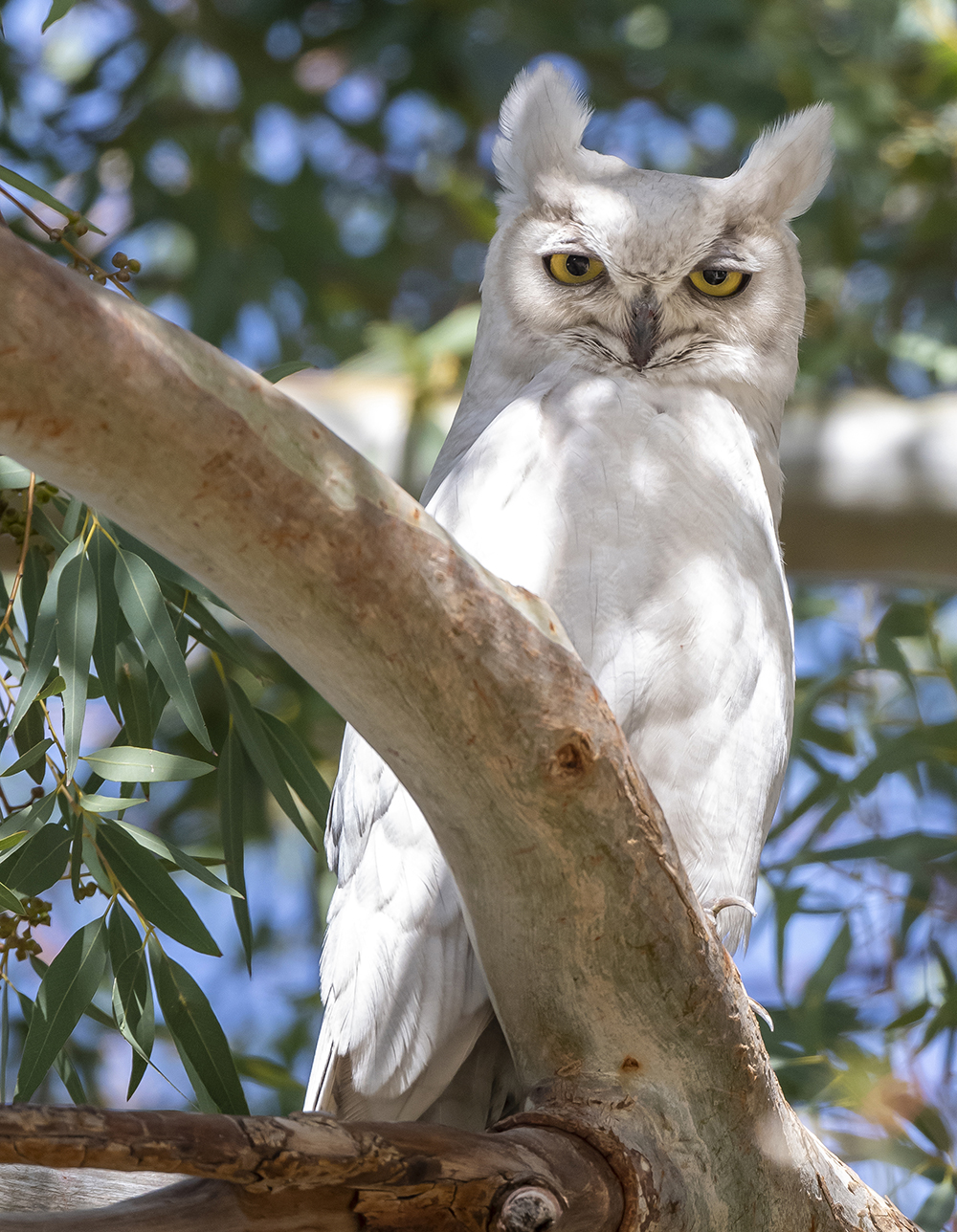
Leucistic Great Horned Owl. I photographed this unusual owl in the Catalina Foothills in Tucson. Leucism is a condition in which there is partial loss of pigmentation in an animal resulting in white, pale, or patchy coloration of the skin, hair, feathers, scales or cuticle, but not the eyes. Unlike albinism, it is caused by a reduction in multiple types of pigment, not just melanin.